New Kitten Feeding Guide: Portions, Schedule & Food
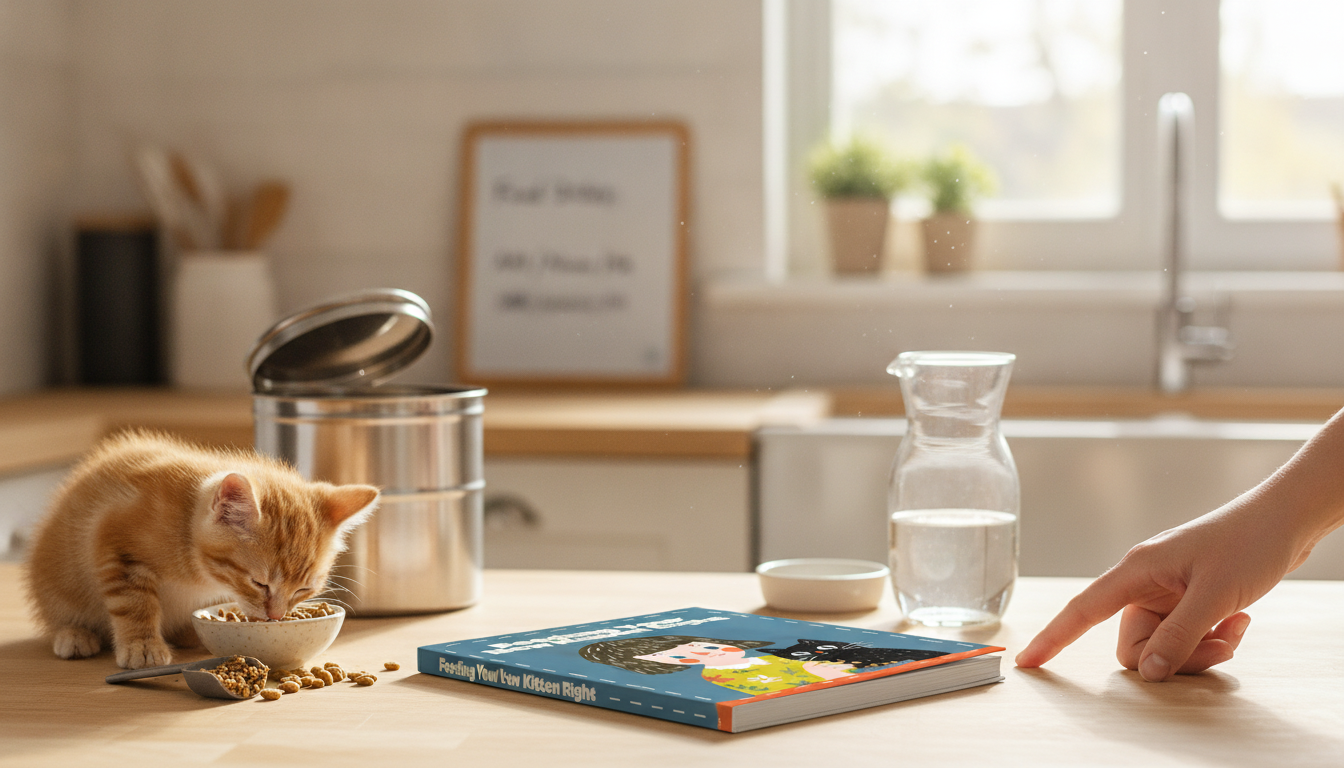
Feeding Your New Kitten Right: A Practical Guide to Healthy Growth and Happy Mealtimes
A new kitten’s first weeks at home set the tone for lifelong health. The right food, portions, and feeding routine support steady growth, digestion, hydration, and good habits. Use this guide to choose age-appropriate meals, transition safely, and handle common hiccups like picky eating or soft stools—without guesswork.
What your kitten needs to thrive
Kittens aren’t just “small cats.” Their bodies are building muscle, bone, and brain tissue fast—so nutrition needs to be more energy-dense and tightly balanced than an adult cat’s diet.
- High-quality animal protein as the foundation for muscle development and healthy growth.
- More calories per pound than adult cats because kittens grow rapidly and burn energy through play.
- Essential fatty acids (including DHA) to support brain and vision development.
- Balanced calcium and phosphorus for bones and teeth. Skip unbalanced home recipes unless formulated by a veterinary nutritionist.
- Taurine plus key vitamins/minerals required for normal heart, eye, and immune function.
- Plenty of fresh water at all times—especially important for kittens eating mostly dry food.
When comparing labels, look for foods formulated for growth and made by brands with robust quality control. Helpful references include AAFCO nutrient profiles and the WSAVA Global Nutrition Guidelines.
When kittens start eating food and drinking water
Weaning typically begins around 3–4 weeks with softened food and gradually moves toward solid meals. By about 6–8 weeks, many kittens can handle complete & balanced kitten wet food and/or dry kibble (dry is often easier if moistened at first). Fresh water should be available as soon as kittens begin exploring food—shallow bowls are less intimidating.
If a kitten is under 8 weeks, very small, or not eating reliably, contact a veterinarian promptly. Young kittens can decline quickly from dehydration or low blood sugar.
Typical feeding milestones by age
| Kitten age | What to offer | Texture tips | Feeding frequency |
|---|---|---|---|
| 0–3 weeks | Mother’s milk or kitten milk replacer (KMR) if needed | Bottle/syringe only under guidance; keep kitten warm | Every 2–4 hours (varies by age/size) |
| 3–4 weeks | KMR + kitten wet food “gruel” | Very soft; shallow dish; expect mess | 4–6 small meals/day |
| 5–6 weeks | Kitten wet food; begin introducing dry (moistened) | Reduce moisture gradually as chewing improves | 4 meals/day |
| 7–8 weeks | Complete & balanced kitten food (wet and/or dry) | Dry can be offered unmoistened if chewing well | 3–4 meals/day |
| 4–6 months | Kitten food with measured portions | Wet helps hydration; dry supports convenience | 2–3 meals/day |
| 6–12 months | Continue kitten formula until spay/neuter timing and vet guidance | Transition planning starts near 10–12 months | 2 meals/day |
Choosing a food to start a new kitten on
- Pick a “complete and balanced” kitten food that meets AAFCO/FEDIAF growth standards (or a reputable “all life stages” formula).
- Prefer kitten-specific formulas for the right energy density and nutrient levels.
- Wet vs. dry: wet supports hydration and can be easier for small mouths; dry is convenient and calorie-dense. Many households use both.
- Avoid cow’s milk; lactose intolerance commonly causes diarrhea.
- Be cautious with grain-free or boutique diets unless recommended by a veterinarian; formulation and quality control matter more than marketing.
- If you know the previous diet, start with it for a few days, then transition slowly to reduce stomach upset.
For a deeper dive into balanced feline nutrition basics, Cornell’s veterinary resources are a solid starting point: Cornell University College of Veterinary Medicine.
How much to feed and how often
Use the package guide as a starting point, then adjust to your kitten’s body condition and growth. A kitten who’s gaining steadily, playful, and producing normal stools is usually on the right track.
- Multiple small meals support digestion and reduce frantic hunger. Consistent timing also helps curb begging.
- Measure accurately—a kitchen scale is ideal. Small calorie differences matter for tiny bodies.
- Treats should stay minimal and never replace balanced meals. Skip salty human snacks.
- If stools become consistently loose, avoid abrupt changes and confirm portions aren’t excessive.
A gentle 7–10 day transition plan
Switching foods too quickly is a common cause of vomiting or soft stools. A slow blend helps your kitten’s gut adjust.
- Days 1–2: 75% current food + 25% new food
- Days 3–4: 50% current + 50% new
- Days 5–6: 25% current + 75% new
- Days 7–10: 100% new food once stools and appetite are stable
Common feeding challenges (and what to do)
Helpful tools for stress-free mealtimes
A deeper step-by-step plan for kitten nutrition
- Feeding Your New Kitten Right | Essential Kitten Nutrition eBook | Learn What Food to Start a New Kitten On for Healthy Growth & Happy Mealtimes
- Daily Affirmations for Abundant Wealth | Audio Course | Money Mindset & Prosperity | Abundance Manifestation (a calming routine can be helpful during major household changes like a new pet)
FAQ
When do kittens start eating food and drinking water
Weaning usually starts around 3–4 weeks with softened food, and many kittens can eat solid wet or dry kitten food by 6–8 weeks. Fresh water should be available as soon as they begin exploring food, and very young or not-eating kittens should be seen by a veterinarian quickly.
Is wet food or dry food better for a kitten?
Either can work if it’s complete and balanced for growth. Wet food supports hydration and is often easier to eat, while dry food is convenient and calorie-dense—many owners combine both with measured portions.
How many times a day should a kitten eat?
Very young kittens need multiple small meals (often 4–6 daily), then most transition to 3–4 meals by 7–8 weeks, 2–3 meals by 4–6 months, and about 2 meals a day by late kittenhood. Adjust based on body condition, appetite, and your veterinarian’s guidance.











Leave a comment